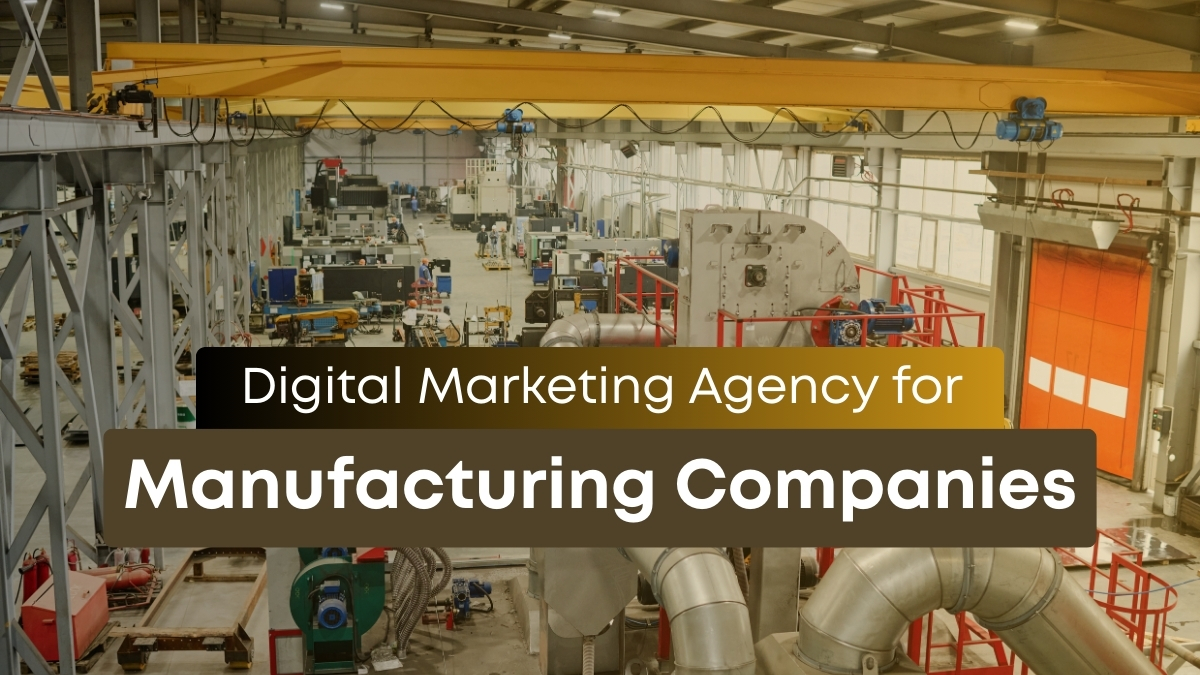
You build incredible products. Your shop floor is a model of efficiency, your quality control is second to none, and your engineering is world-class.
But are your customers finding you? In a landscape dominated by online searches and digital relationships, even the most established manufacturers can feel invisible.
If you’re struggling to connect with new distributors, engineers, or B2B buyers, you're not alone. The problem often isn't your product; it's your marketing.
Many manufacturing companies operate in a world of long sales cycles, complex products, and a very specific customer base.
This is where a specialized digital marketing agency for manufacturing becomes not just a vendor, but a vital growth partner. They understand your unique challenges and know how to translate your industrial strengths into digital success.
This post will explore why a specialized agency is the right choice, what strategies work best for manufacturers, and how to find a partner that can truly deliver results.
The Unique Marketing Challenges in Manufacturing
Marketing a manufacturing business is vastly different from marketing a consumer product or a simple service. Your approach must be tailored to navigate a distinct set of obstacles.
Long and Complex Sales Cycles
You aren't selling an impulse buy. Your customers—be they procurement managers, engineers, or project leads—engage in a lengthy decision-making process.
They conduct extensive research, compare technical specifications, and require multiple touchpoints before making a commitment. A generic marketing approach that focuses on quick wins will inevitably fail. You need a strategy built for the long game.
Reaching a Niche Audience
Your target audience isn't everyone. You need to connect with specific roles within specific industries. Broadcasting your message widely is a waste of time and money. The real challenge is pinpointing and engaging the right decision-makers who have a genuine need for your highly specialized products.
Communicating Technical Value
How do you explain the benefits of a proprietary alloy or a complex CNC machining process in a 30-second ad? It’s nearly impossible.
Your value lies in technical details, precision, and performance. Your marketing must educate and inform rather than just persuade. It needs to speak the language of engineers and technical buyers, building trust through expertise.
Overcoming the "Old School" Mindset
Let's be honest: the manufacturing sector has often been slower to adopt digital marketing. Many companies have relied on trade shows, word-of-mouth, and established relationships for decades.
While these methods are still valuable, they are no longer enough. The biggest challenge can be an internal one: shifting from a traditional mindset to embracing a data-driven, digital-first approach to growth.
How a Specialized Agency Drives Growth for Manufacturers
A marketing agency that understands manufacturing doesn't just apply a standard digital marketing template.
They build a custom engine designed for your specific business goals, using strategies proven to work in the industrial B2B space.
1. Search Engine Optimization (SEO): Be Found When It Matters
When an engineer needs a custom part or a purchasing manager is sourcing a new supplier, where do they go first? Google.
SEO is the process of optimizing your website to rank higher in search engine results for the keywords your potential customers are using.
A manufacturing-focused agency knows the difference between a high-volume consumer keyword and a high-intent industrial search term. They will focus on:
-
Technical SEO: Ensuring your website is structured correctly so search engines can easily crawl and index your product pages, spec sheets, and case studies.
-
Keyword Strategy: Targeting long-tail keywords like "custom aluminum extrusion for aerospace" instead of generic terms like "aluminum parts." This attracts highly qualified traffic.
-
Content Creation: Developing in-depth articles, guides, and resource pages that answer your audience's technical questions, establishing your site as an authoritative source.
The goal of SEO is to make you the obvious answer when a potential customer searches for a solution you provide.
2. Pay-Per-Click (PPC) Advertising: Precision Targeting
While SEO builds long-term authority, PPC advertising delivers immediate visibility. Platforms like Google Ads and LinkedIn Ads allow you to place your company directly in front of your target audience with incredible precision.
A specialized agency will leverage PPC to:
-
Target by Job Title and Industry: On LinkedIn, you can run campaigns that are only shown to "Mechanical Engineers" in the "Automotive Industry" at companies with over 500 employees. This level of hyper-targeting is impossible with traditional advertising.
-
Capture High-Intent Leads: Run Google Ads campaigns that appear when a user searches for a specific part number or a service you offer, capturing them at the exact moment they are looking to buy.
-
Promote Key Content: Use ads to drive traffic to your most valuable assets, like webinars, white papers, or detailed case studies, helping you generate qualified leads.
3. Content Marketing: Build Trust Through Expertise
Content marketing is the heart of a modern manufacturing marketing strategy. It's how you demonstrate your expertise, build trust, and guide prospects through their long buying journey.
This isn't just about blogging; it's about creating valuable resources that solve problems for your audience.
Effective content for manufacturers includes:
-
Detailed Case Studies: Showcasing how you solved a complex problem for a client. This provides social proof and demonstrates your capabilities.
-
Technical White Papers and Guides: Offering deep dives into a specific technology, process, or industry challenge. This positions you as a thought leader.
-
Video Content: Think facility tours, machine demonstrations, or interviews with your engineers. Video can bring your technical processes to life in a way text cannot.
-
CAD Drawings and Spec Sheets: Making these resources easily accessible on your website is a powerful way to serve engineers and designers who are in the consideration stage.
Great content nurtures leads over time, keeping your company top-of-mind so that when they are ready to make a purchase, you are their first call.
Beyond the Basics: Advanced Strategies for a Competitive Edge
Once you have a solid foundation with SEO, PPC, and content, a specialized agency can help you implement more advanced tactics.
These strategies are designed to accelerate growth and target your most valuable potential customers with unparalleled precision.
1. Account-Based Marketing (ABM): The Ultimate in Precision
Instead of casting a wide net hoping to catch qualified leads, Account-Based Marketing (ABM) flips the funnel.
It's a highly focused strategy where your sales and marketing teams collaborate to target a specific list of high-value companies, or "accounts." Think of it as fishing with a spear instead of a net.
For manufacturers, ABM is a game-changer because:
-
It’s Hyper-Personalized: You're not just marketing to "engineers," but to key individuals at a specific company you want to do business with. The content and ads they see are tailored directly to their company's known challenges and needs.
-
It Aligns Sales and Marketing: ABM forces your teams to work together from the start, agreeing on which accounts to target and how to engage them. This synergy leads to a much more efficient and effective sales process.
-
It Delivers Higher ROI: By focusing all your resources on accounts that are most likely to become major customers, you eliminate wasted ad spend and effort. ABM campaigns consistently deliver a higher return on investment than broader marketing initiatives.
An agency specializing in manufacturing can help you identify target accounts, create personalized outreach campaigns, and track engagement across the entire buying committee within that organization.
2. Leveraging Analytics: Turning Data into Dollars
How do you know if your marketing is actually working? The answer lies in data. A top-tier agency doesn't just launch campaigns; they measure, analyze, and optimize them relentlessly. In manufacturing, where every dollar counts, this data-driven approach is critical.
Your agency partner should provide clear insights into key metrics, such as:
-
Lead Quality Score: Which marketing channels are delivering leads that actually turn into sales? By tracking leads from their first click to a closed deal, you can focus your budget on what truly works.
-
Content Engagement: Are engineers actually downloading your white papers? Are procurement managers watching your facility tour videos? Analytics tell you what content resonates with your audience, so you can create more of it.
-
Website User Behavior: Understanding how visitors navigate your site helps identify friction points. For example, if users drop off on a specific product page, it might indicate that technical information is missing or hard to find.
Effective use of analytics moves you from guessing to knowing, allowing you to make informed decisions that directly impact your bottom line.
3. CRM Integration: Creating a Seamless Customer Journey
Your Customer Relationship Management (CRM) system is the central hub for your sales data. Integrating it with your marketing automation platforms is one of the most powerful steps you can take.
This integration creates a closed-loop system where information flows freely between marketing and sales.
The benefits of a fully integrated CRM include:
-
Enhanced Lead Nurturing: When a prospect downloads a CAD file from your website, that activity is logged in the CRM. Your marketing system can then automatically send them a follow-up email with a related case study, nurturing them without any manual effort.
-
Empowered Sales Team: Your salespeople gain a 360-degree view of a prospect's interactions. They can see which emails a lead has opened, which pages they've visited, and what content they’ve engaged with. This allows them to have more relevant and timely conversations.
Accurate ROI Measurement: By connecting marketing campaigns directly to sales outcomes in the CRM, you can finally get a clear, accurate picture of your marketing ROI. You can prove that the investment in a specific ad campaign led directly to a major new contract.
Final Thoughts
Relying solely on traditional sales methods in today's digital world is like running a modern factory with outdated machinery.
It might still work, but it’s inefficient and you’re falling behind your more forward-thinking competitors.
Partnering with a digital marketing agency that specializes in manufacturing gives you an unbeatable advantage.
They speak your language, understand your customers, and know how to build a robust digital presence that generates qualified leads and drives measurable growth.
Stop letting your competitors win the digital race. Invest in a marketing strategy as sophisticated as your engineering.

Steven Alex is a passionate blogger with over 10 years of experience driving online growth and visibility.