
-
Start with one service: Website, email, or landing page copywriting.
-
Choose a niche: Focus on 1–2 industries you understand.
-
Learn persuasive writing: Focus on customer problems, benefits, and CTAs.
-
Build a portfolio: Create 3–5 samples, even without clients.
-
Price by value: Charge for the results you help businesses achieve, not just word count.
-
Find clients: Use personalized outreach, LinkedIn, networking, and referrals.
-
Research before writing: Understand the client's business and target audience.
-
Build recurring income: Turn one-time projects into monthly services.
30-Day Plan
-
Week 1: Choose a service and niche.
-
Week 2: Create portfolio samples.
-
Week 3: Set up your portfolio and pricing.
-
Week 4: Start contacting potential clients.
Biggest takeaway: You don't need a degree, expensive tools, or experience to start. Focus on solving business problems with words, finding your first client, and improving as you go.
Starting a copywriting business can feel surprisingly simple at first. You know how to write, businesses need words, and it seems like the only missing piece is finding someone willing to pay you.
Then the questions begin. What services should you offer, how much should you charge, where do clients come from, and how do you convince a business owner to trust you when you are still new?
The good news is that you do not need an agency, expensive software, or years of professional writing experience to begin. What you need is a clear service, a basic understanding of business problems, a few strong writing samples, and a consistent way to find potential clients.
This guide walks you through how to start a copywriting business from the ground up, even if you are starting with no clients and no formal copywriting background.
What Is a Copywriting Business?

A copywriting business helps companies communicate in a way that encourages people to take action. That action might be buying a product, booking a consultation, joining an email list, requesting a quote, or learning more about a service.
Unlike general content writing, copywriting is closely connected to sales and marketing. A copywriter is not simply trying to make sentences sound better, but to help a business turn attention into measurable results.
You might write website pages for a local contractor, email campaigns for an online store, or landing pages for a software company. The format may change, but the business goal behind the writing remains important.
Why Copywriting Can Be a Good Business for Beginners

One reason copywriting is attractive is that the startup cost can be very low. A laptop, internet connection, basic writing tools, and a professional way to communicate with clients are often enough to begin.
You also do not need to know how to code or build complicated websites. Most of your work happens inside documents, email platforms, content management systems, or client collaboration tools.
The bigger advantage is that businesses regularly need written communication. Websites change, new products launch, email campaigns need fresh messages, and companies constantly look for better ways to explain what they offer.
Start by Understanding What Clients Actually Pay For

A beginner may think a client is paying for 1,000 words. In reality, the client is usually paying for a better business outcome.
Imagine a small business owner whose website gets traffic but very few inquiries. The owner may not care whether the homepage has 400 words or 800 words, but they care deeply about getting more qualified customers.
That shift in thinking changes the way you approach copywriting. Instead of selling words, you begin selling clearer communication, stronger positioning, better conversion opportunities, and useful marketing assets.
Choose a Copywriting Service to Start With

It is tempting to offer every writing service when you are new. You may want to write websites, blogs, ads, emails, brochures, product descriptions, social posts, and sales pages all at once.
Starting narrower usually makes the business easier to explain and sell. A client understands your value faster when you can clearly say what type of problem you solve.
Website Copywriting
Website copywriting is a practical starting point because nearly every business needs a clear website. Typical projects include homepages, service pages, about pages, landing pages, and contact page copy.
A business owner may already have a website but feel that the message is confusing or outdated. Helping them explain their offer more clearly can become a valuable service.
Email Copywriting
Email copywriting includes promotional campaigns, welcome sequences, abandoned cart emails, follow-up emails, and newsletters. Businesses use email because it allows them to communicate directly with people who have already shown interest.
This type of copywriting can also lead to repeat work. A company may need new emails every month instead of hiring you for only one project.
Landing Page Copywriting
A landing page usually has one main goal. It might encourage someone to book a call, download something, register for an event, or buy a specific product.
Because the purpose is focused, landing page copywriting can be easier to measure. Clients can often compare leads, sales, or sign-ups before and after changes are made.
Sales Copy
Sales copy includes product pages, sales pages, offer pages, and promotional materials. These projects require a stronger understanding of customer motivation, objections, benefits, and buying decisions.
You can move into this area as your skills improve. Strong sales copy can be valuable because it is directly connected to revenue.
Pick a Market You Can Understand

You do not need to choose one industry forever. However, having a few types of businesses you understand can make your early marketing much easier.
For example, you might focus on local service companies, ecommerce brands, consultants, real estate businesses, software companies, or professional service firms. Choose markets where you can understand the customer's problem without spending days learning basic industry language.
Suppose you enjoy researching home improvement businesses. You may quickly notice that many contractors have websites filled with vague statements such as quality service and customer satisfaction, but very little information about why a homeowner should choose them.
That observation creates an opportunity. Your service can focus on making the business easier to understand and easier to trust.
Learn the Foundations of Persuasive Writing

You do not need a degree in marketing to become a copywriter. You do need to understand why people make decisions and how clear communication supports those decisions.
Good copy usually answers practical questions. What is being offered, who is it for, what problem does it solve, why should someone care, and what should they do next?
Focus on Benefits, Not Just Features
A feature explains what something has. A benefit explains why that feature matters to the customer.
If a software platform automatically sends appointment reminders, the feature is automation. The benefit is fewer missed appointments and less time spent manually contacting customers.
Learning to make that connection will improve your copy quickly.
Write for One Clear Reader
Weak copy often sounds like it was written for everyone. Stronger copy feels like the business understands a specific customer and their situation.
Before writing, picture the reader's problem. Ask what they are worried about, what they want to achieve, what might stop them from buying, and what information would make the decision easier.
Make the Next Step Obvious
Business copy should usually guide the reader somewhere. That might be a button, booking form, phone call, checkout page, or email signup.
A page can sound impressive and still fail if the reader does not know what to do next. Clear calls to action are part of good copywriting, not an afterthought.
Build Copywriting Samples Before You Have Clients

One of the biggest beginner problems sounds like this: clients want samples, but you need clients to get samples. Fortunately, your first portfolio does not need to come from paid work.
You can create realistic sample projects for businesses you understand. The important part is showing how you think, structure a message, and improve communication.
Rewrite an Existing Business Page
Find a business website with unclear copy and rewrite one page as practice. Do not present the rewrite as official client work unless the business actually hired you.
You can label it clearly as a sample or concept project. Explain the problem you noticed, the changes you made, and the reasoning behind the new version.
Create a Fictional Brand Project
You can also create a realistic business scenario. For example, write a homepage for a fictional cleaning company in Denver or an email sequence for a made-up fitness brand based in Austin.
The business does not need to exist. Your goal is to demonstrate that you understand customer needs, offers, benefits, objections, and calls to action.
Show Your Thinking
A strong portfolio is more useful when it explains why you made certain decisions. A short note about the audience, goal, and strategy gives potential clients more confidence than a page filled with random writing samples.
This also demonstrates business thinking. Clients often want someone who can understand the purpose behind the copy, not simply someone who can write attractive sentences.
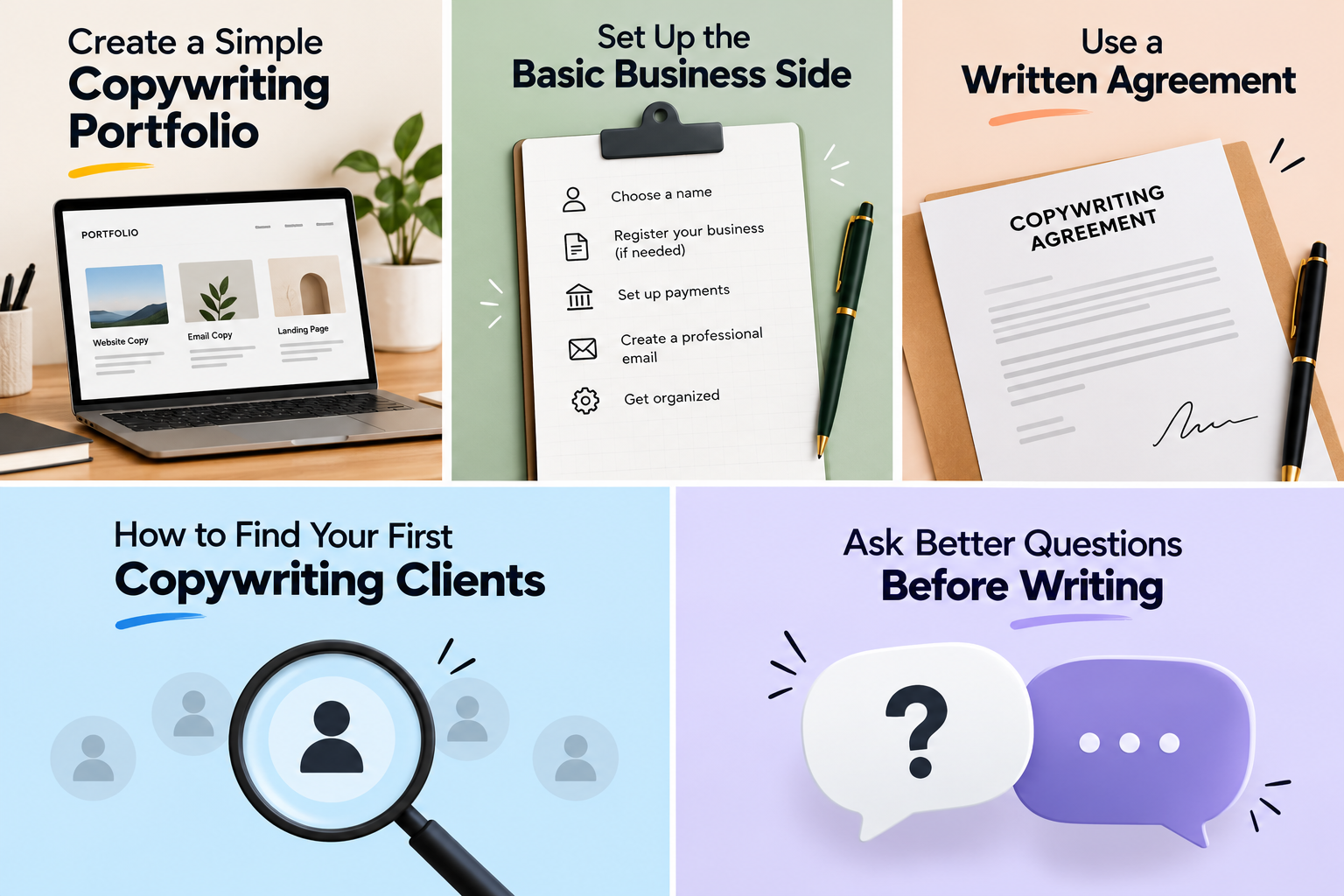
Create a Simple Copywriting Portfolio

Your first portfolio does not need a complicated website. A clean online page with your services, samples, contact information, and a short introduction can be enough.
You can start with three to five strong samples. Quality matters more than filling a portfolio with twenty pieces of average work.
Include a short explanation for each project. Mention the type of business, the communication problem, the intended audience, and the goal of the copy.
Decide How Much to Charge
Pricing feels uncomfortable for many new copywriters. The easiest way to handle it is to treat your first prices as a starting point rather than a permanent decision.
You can charge per project, per page, per email, per hour, or through a monthly arrangement. Project pricing is often easier for clients because they know the total cost before the work begins.
Avoid Pricing Only by Word Count
Word count can be useful for some writing projects, but it is often a poor way to price copywriting. A short homepage headline may take more thought than several paragraphs of simple text.
Copywriting value is usually connected to the business purpose of the page. Research, customer understanding, revisions, strategy, and conversion goals should also influence your price.
Create Simple Packages
You might offer a homepage package, a five-page website package, or a short email sequence package. Clear packages help clients understand what they are buying.
Keep your first offers simple. You can add strategy sessions, additional revisions, research, brand voice work, or ongoing support later.
Set Up the Basic Business Side

You do not need a large operation, but you should treat the work professionally from the beginning. Basic organization makes you easier to trust and reduces confusion with clients.
Depending on where you live, you may need to register a business, report income, collect certain taxes, or follow local licensing requirements. Because these rules vary by location, check the official government and tax guidance that applies to your area.
You should also have a system for proposals, agreements, invoices, and payments. Even a simple process is better than managing every project through scattered text messages.
Use a Written Agreement

A written agreement protects both you and your client. It should explain what you are delivering, how much the project costs, the payment terms, the expected timeline, and how revisions will work.
It is also useful to clarify what happens when the scope changes. If a client requests six additional pages after agreeing to a two-page project, you should have a clear way to price the extra work.
For important contracts or legal questions, consider guidance from a qualified professional in your jurisdiction. Templates are useful starting points, but they do not replace advice tailored to your business.
Create a Repeatable Client Process
Professional service businesses become easier to run when every client does not require a completely different workflow. A simple process gives you structure and helps clients know what to expect.
Your process might begin with an inquiry, followed by a discovery call or questionnaire. After that, you can send the proposal, collect payment, research the project, write the copy, handle revisions, and deliver the final files.
The exact process can change as your business grows. What matters is having a basic system instead of making decisions from scratch every time someone contacts you.
How to Find Your First Copywriting Clients
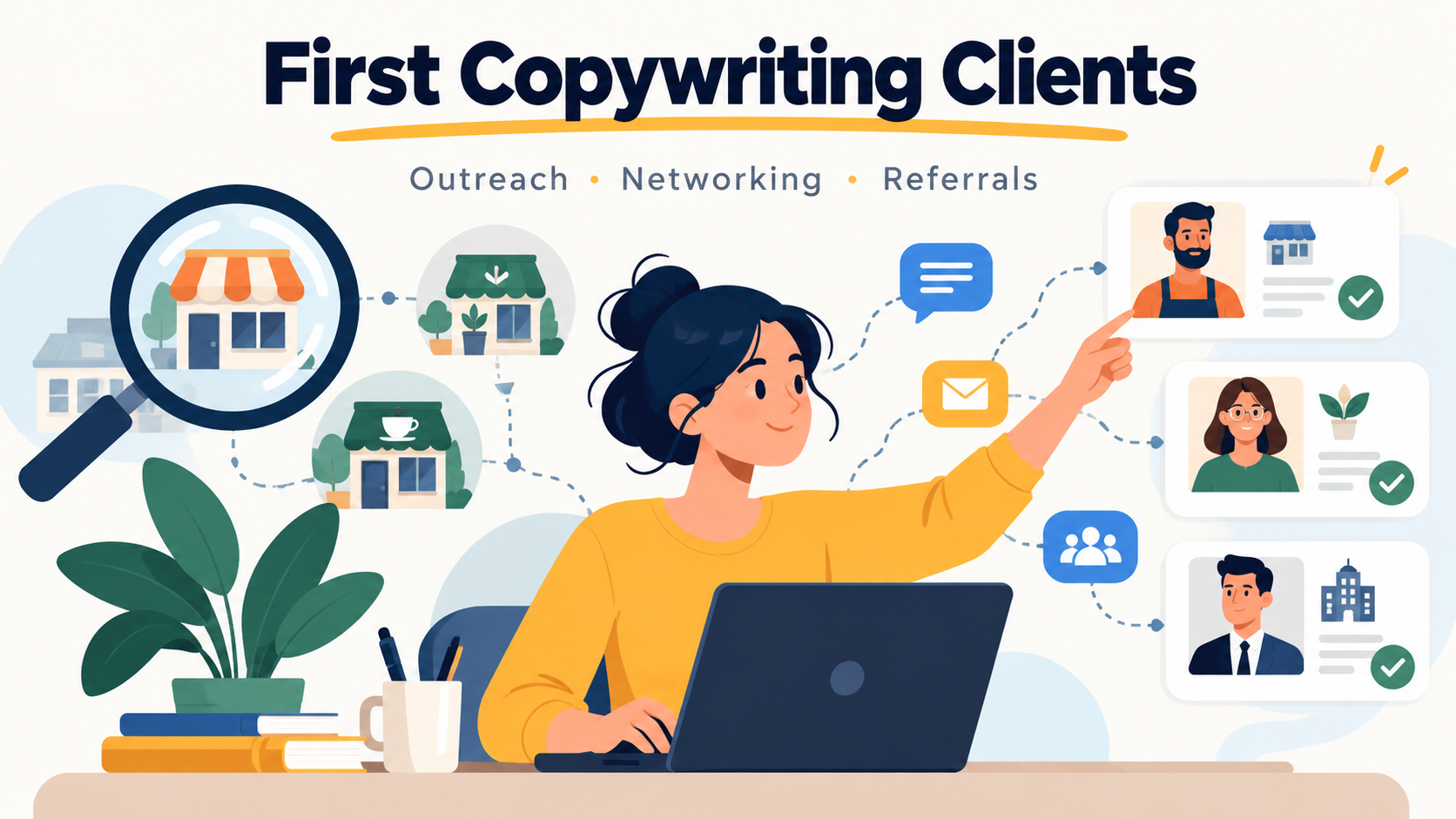
Getting clients is usually harder than learning how to write a headline. Many talented writers struggle because they spend all their time improving their craft and very little time talking to businesses.
Client acquisition works better when it becomes a regular activity. You do not need to contact hundreds of people in one day, but you do need consistent conversations with potential buyers.
Start With Businesses You Can Research
Look for companies where you can quickly identify a communication problem. Their homepage might be unclear, their service pages may lack useful information, or their emails might not explain the value of their offer.
Your outreach becomes more useful when you mention something specific. A thoughtful observation feels very different from sending a generic message that says you are a copywriter looking for work.
Use Personalized Outreach
Consider a business owner named Madison who runs a small consulting firm in North Carolina. Her website explains her background in detail, but visitors have to scroll through several sections before understanding what service she actually sells.
Instead of sending Madison a generic pitch, you could point out that the core offer is difficult to find. You might then suggest a clearer opening section and briefly explain how that could help new visitors understand the business faster.
The goal is not to insult the existing website. Your job is to show that you paid attention and have a practical idea.
Build Relationships, Not Just Pitches
Networking can happen through business communities, LinkedIn, local groups, professional associations, and existing contacts. You do not need to begin every conversation by asking for a project.
Helpful conversations often lead to referrals later. A web designer may need someone to handle website copy, while a marketing consultant may occasionally need support with email campaigns.
Ask Better Questions Before Writing
Professional copywriting begins before the first sentence is written. You need to understand the company, the customer, the product, and the goal of the project.
Ask clients what they sell, who usually buys it, why customers choose them, what objections they hear, what competitors say, and what action they want visitors to take. The answers give you material that generic writing tools cannot invent reliably.
Customer reviews can also be useful research material when you have permission and access to appropriate sources. The language real customers use often reveals what they value most.
Do Not Depend on Creativity Alone
Copywriting is partly creative, but good business copy is usually built on research. A clever phrase means very little if it does not match what the customer actually cares about.
Before writing, gather information about the offer, market, audience, competitors, and common objections. Then organize those ideas around the customer's decision process.
This approach also makes writing easier. You are not staring at a blank page hoping inspiration appears because your research has already given you something useful to say.
Learn Basic SEO Copywriting
Search engine optimization can make your services more valuable, especially when you write website content. You do not need to become a technical SEO specialist, but understanding search intent, headings, keywords, internal links, and page relevance can help.
SEO copywriting is not about repeating a keyword twenty times. It is about creating a page that clearly answers what a searcher is trying to find while supporting the business goal of the website.
For a page targeting "emergency plumber in Phoenix," the visitor likely wants fast help, location information, service details, trust signals, and a clear way to call. The copy should serve that need naturally.
Improve Your Skills Through Real Feedback

Reading copywriting books and watching tutorials can help, but progress becomes faster when you write regularly. Practice gives you a chance to see where your copy becomes vague, repetitive, or overly complicated.
Ask experienced marketers, business owners, editors, or trusted peers for useful feedback when possible. Instead of asking whether the copy is good, ask whether the offer is clear and whether the next step makes sense.
Client feedback also teaches you a great deal. Over time, you begin to notice patterns in the questions clients ask and the objections customers commonly have.
Track the Results When Possible
Copywriters become more valuable when they understand what happens after the copy is published. Ask clients whether inquiries increased, email clicks improved, conversion rates changed, or sales pages performed better.
Not every project will have perfect tracking. Still, developing a results-focused mindset helps you connect your writing to business performance.
When you eventually have measurable wins, turn them into short case studies. Specific outcomes can make future clients more comfortable hiring you.
Turn One-Time Projects Into Ongoing Work
A copywriting business becomes more stable when every month does not begin with zero clients. Look for ways to support existing clients after the original project ends.
A website client might later need landing pages, email campaigns, blog content, product launches, or website updates. If your first project went well, continuing the relationship can be easier than constantly searching for new clients.
You can also offer monthly writing support. This works well when a company regularly needs emails, sales pages, website updates, or campaign copy.
Build a Reputation Around Reliability

Good writing matters, but clients remember the overall experience. Responding professionally, meeting deadlines, asking useful questions, and communicating clearly can separate you from writers who may technically have more experience.
Do not promise results that you cannot control. Copy influences marketing performance, but traffic quality, pricing, product strength, design, sales processes, and competition also affect results.
Being realistic builds trust. A client is more likely to work with you again when they feel that your advice is practical instead of exaggerated.
Common Mistakes New Copywriters Should Avoid
One common mistake is spending months preparing without approaching potential clients. Your portfolio can always improve, but you need real conversations to understand what businesses are actually willing to pay for.
Another mistake is copying the style of famous copywriters too closely. Clients need writing that fits their brand and customers, not an imitation of someone else's voice.
You should also avoid accepting unlimited revisions without clear boundaries. A simple revision policy prevents projects from continuing indefinitely.
A Simple 30-Day Plan to Start Your Copywriting Business
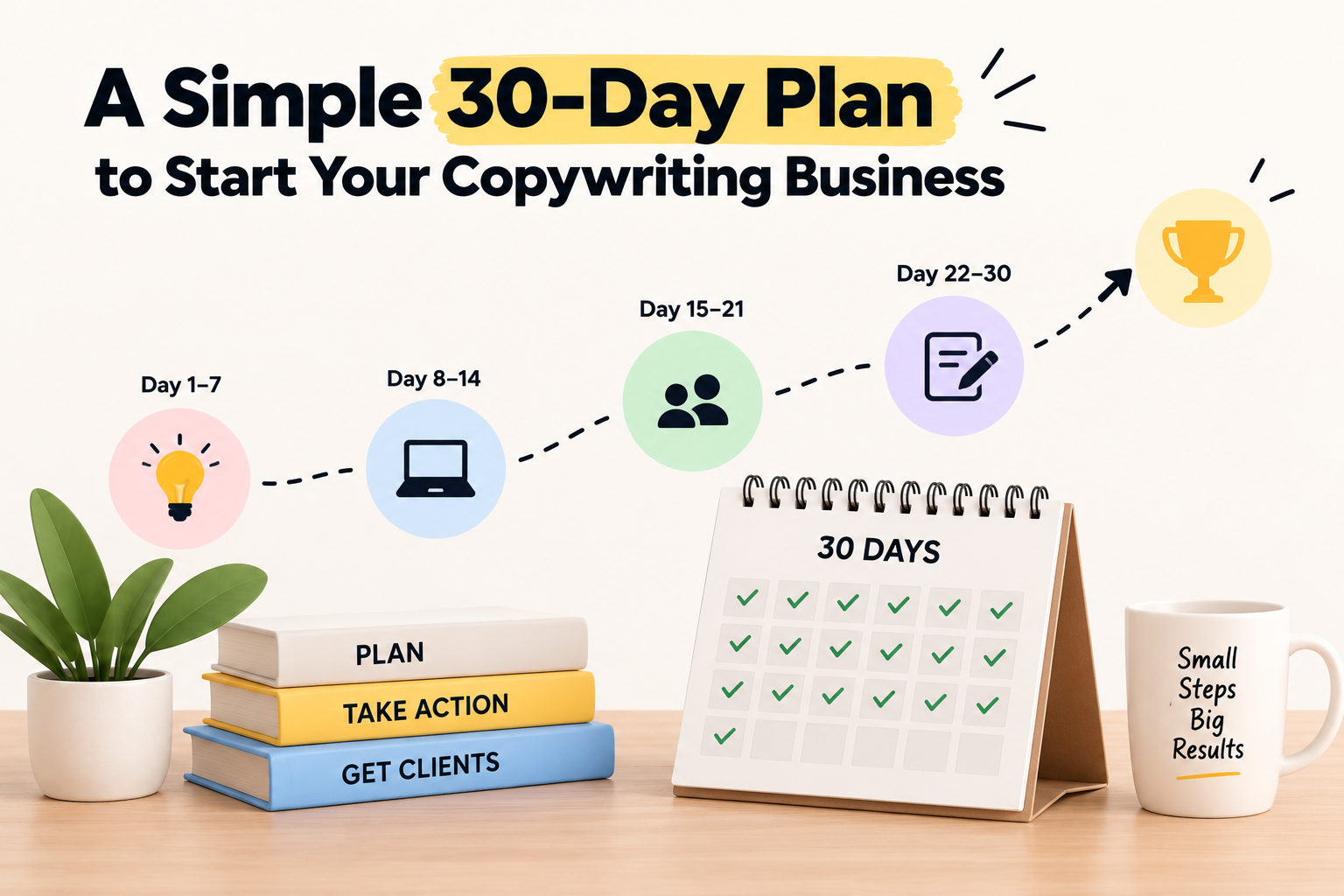
During the first week, choose one or two services and one or two markets you want to explore. Study strong examples of website pages, emails, or landing pages related to those services.
During the second week, create three portfolio samples. Focus on realistic business situations and explain the reasoning behind your work.
Use the third week to create a basic portfolio page, service description, outreach message, proposal format, and payment process. Nothing needs to be perfect, but the business should be ready to accept a client.
During the fourth week, begin contacting relevant businesses and building professional relationships. Track who you contact, what problems you notice, the responses you receive, and which types of conversations lead to opportunities.
How Much Can a Copywriting Business Make?

There is no guaranteed income level for a copywriting business. Earnings depend on your skills, positioning, client market, sales ability, reputation, project complexity, and how consistently you find work.
A beginner may start with smaller projects while building experience. As your portfolio, business understanding, and results improve, you can gradually move toward higher-value projects and longer client relationships.
The most useful goal at the beginning is not chasing a dramatic income number. Focus first on learning how to find a client, deliver good work, collect payment professionally, and earn a referral or repeat project.
Do You Need Expensive Copywriting Tools?
You can start with very little software. A writing application, cloud storage, video meeting tool, invoicing system, and basic project management method may be enough.
Additional tools can help with research, grammar, SEO, organization, and client management, but tools should support your thinking rather than replace it. Clients are paying for judgment, communication, and problem solving.
Spend money when a tool saves meaningful time or improves the client experience. Buying a large collection of subscriptions before you have revenue is rarely necessary.
Can You Start a Copywriting Business With No Experience?
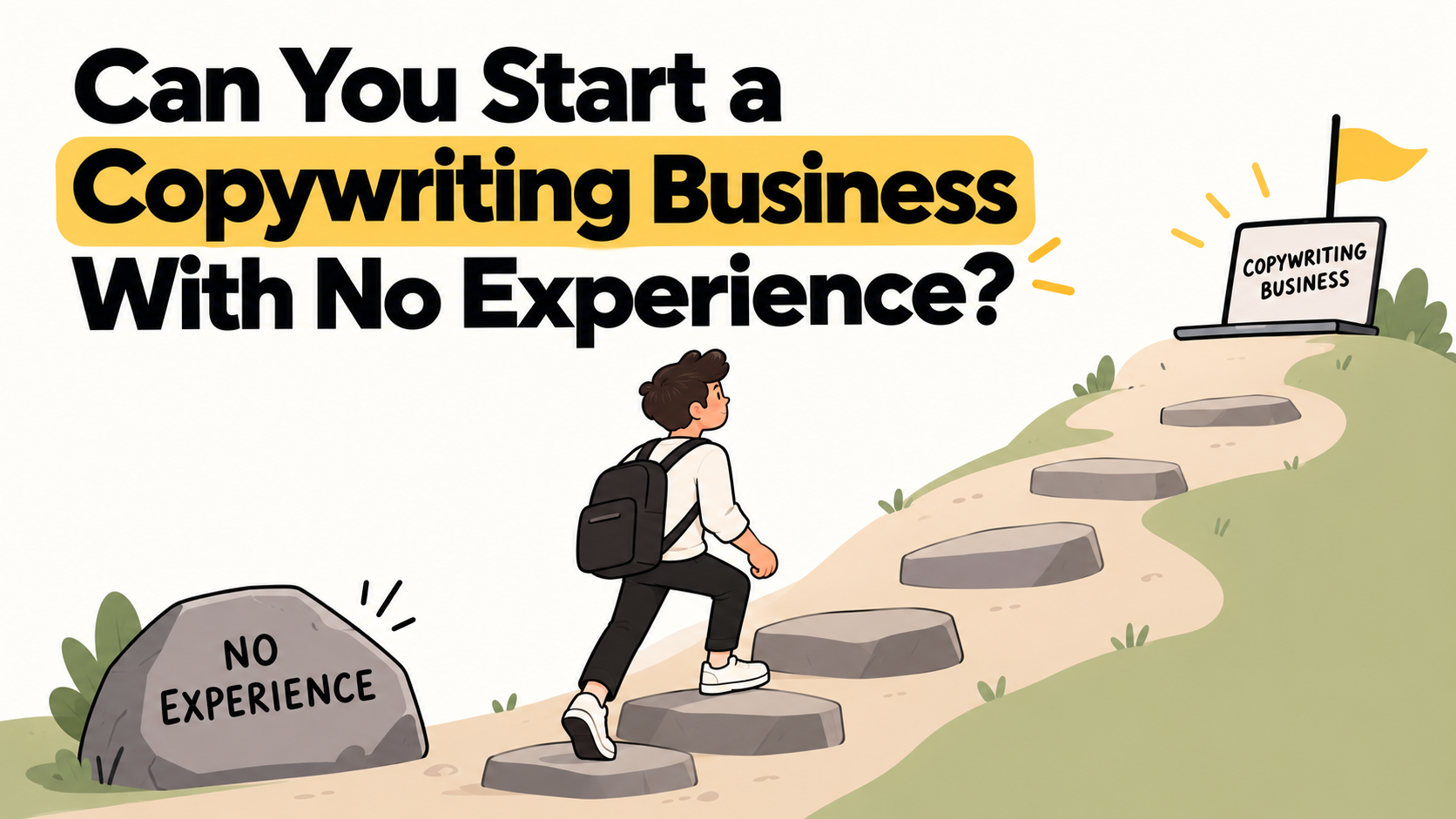
Yes, but starting with no experience does not mean starting without preparation. You still need to practice, learn basic marketing principles, study examples, and create useful samples.
Your first client does not expect you to know everything in marketing. They do expect you to communicate professionally, understand the assignment, meet expectations, and take the project seriously.
Experience comes from doing the work. The sooner you move from endless preparation into careful practice and real client conversations, the sooner your skills begin to develop.
How to Grow Your Copywriting Business Over Time

Growth does not always mean hiring a team or turning yourself into a large agency. It may simply mean working with better clients, charging more appropriately, improving your systems, and building more predictable revenue.
You may eventually specialize in a profitable area such as SaaS copywriting, financial services, ecommerce, healthcare marketing, B2B technology, or professional services. Specialization can make your expertise easier to understand and easier to recommend.
You can also expand your services when the market asks for it. A copywriter may gradually add messaging strategy, content planning, email strategy, conversion research, or consulting.
Final Thoughts
Starting a copywriting business is less about becoming a perfect writer and more about becoming useful to businesses. You need to understand what companies are trying to sell, what customers need to hear, and how your writing connects the two.
Start with one service, create a few thoughtful samples, talk to real businesses, and learn from every project. The business becomes clearer once you stop treating copywriting as only a writing skill and begin treating it as a way to solve communication and marketing problems.
Your first portfolio will not be your best portfolio, and your first price will not be your final price. What matters is building a process that helps you improve, earn trust, and create work that supports real business goals.
Frequently Asked Questions About Starting a Copywriting Business
Do I need a degree to start a copywriting business?
No specific degree is required to begin working as a copywriter. Clients are generally more interested in your writing ability, business understanding, professionalism, and ability to produce useful work.
Training in marketing, communication, journalism, psychology, or business can be helpful, but practical experience matters greatly. A strong portfolio can often speak louder than formal credentials.
How do I get my first copywriting client?
Start by identifying businesses with clear communication problems and contacting them with a personalized message. Referrals, professional networking, LinkedIn, business communities, freelance platforms, and partnerships with designers or marketers can also generate opportunities.
Avoid relying on only one method. A healthy client pipeline usually develops through several channels over time.
Should I create a website before finding clients?
A website can help, but it is not always necessary on day one. A simple portfolio page or professional document with samples and contact details can be enough to begin outreach.
Create a full website when it helps you look more professional or supports your marketing strategy. Do not use website building as an excuse to delay contacting potential clients.
What type of copywriting is best for beginners?
Website copy, email copy, product descriptions, and simple landing pages can all be practical starting points. The best choice depends on your interests, writing strengths, and the types of businesses you want to work with.
Choose one area and practice it deeply enough to build confidence. You can expand your services once you understand what clients are asking for.
Is copywriting still a good business with AI tools available?
Businesses still need people who can understand customers, evaluate offers, conduct research, shape positioning, make strategic decisions, and take responsibility for the final message. AI tools can support parts of the writing process, but useful commercial copy requires judgment and context.
The opportunity is strongest for copywriters who understand business rather than simply producing words. Learning how to combine research, strategy, editing, customer insight, and responsible tool use can make your service more valuable.

Arlo Bennett is a tech blogger and digital culture journalist who translates complex innovations into clear, compelling narratives.