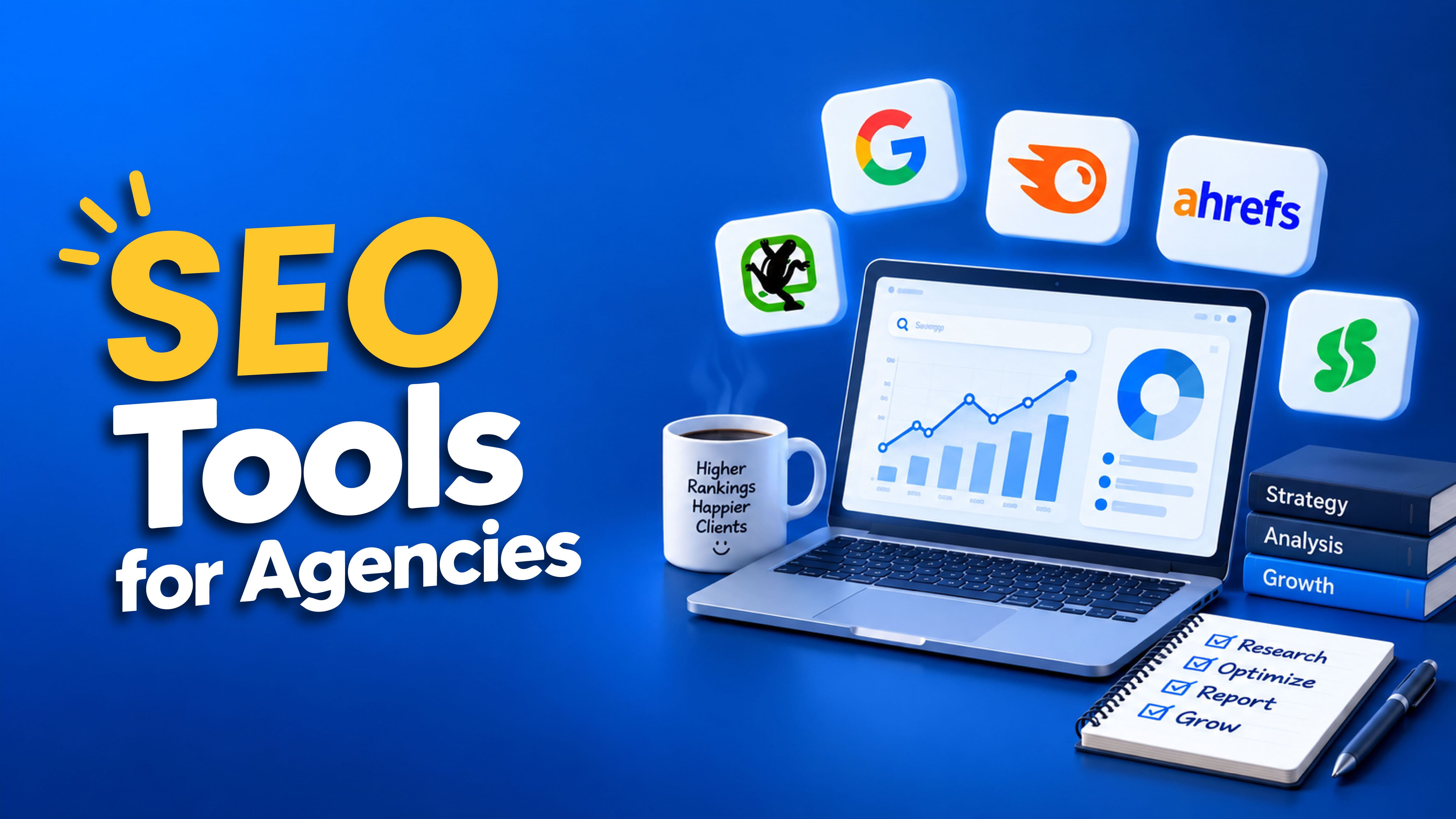
The best SEO tools for agencies in 2026 are Semrush, Ahrefs, Screaming Frog, Mangools, Google Search Console, Google Analytics 4, Looker Studio, PageSpeed Insights, and a handful of specialized tools depending on the work you do.
You do not need all of them. For most agencies, the smarter approach is to build a small SEO toolkit where each platform has a clear job, from finding keywords and studying competitors to crawling websites, tracking rankings, reporting results, and spotting technical problems.
At our agency, we primarily work with tools such as Semrush, Ahrefs, Mangools, Screaming Frog, Google Search Console, and other specialized SEO platforms. We have learned that having more subscriptions does not necessarily produce better SEO.
The real advantage comes from knowing which tool to open, what data matters, and what action to take after seeing that data.
Quick Answer: What Are the Best SEO Tools for Agencies?
If you are comparing tools quickly, here is the short version.
|
SEO Tool |
Best For |
Good Choice For |
|
Semrush |
All-in-one SEO management |
Agencies managing multiple clients |
|
Ahrefs |
Backlinks and competitor research |
SEO and content teams |
|
Screaming Frog |
Technical SEO audits |
Technical SEO specialists |
|
Mangools |
Simple keyword and SERP research |
Beginners and smaller agencies |
|
Google Search Console |
Organic search performance |
Every website |
|
Google Analytics 4 |
Traffic and conversion analysis |
Every agency |
|
Looker Studio |
Client reporting |
Agencies with recurring reports |
|
PageSpeed Insights |
Performance and Core Web Vitals |
Technical and UX audits |
|
Google Keyword Planner |
Keyword discovery and PPC data |
SEO and paid search teams |
If I were building an SEO agency stack from scratch, I would not buy nine subscriptions on day one. I would start with Google’s free tools, add one serious research platform such as Semrush or Ahrefs, use Screaming Frog for technical work, and expand only when client requirements justify it.
That approach is less exciting than collecting software subscriptions. It is also considerably better for your profit margin.
Why SEO Agencies Need Different Tools Than Business Owners
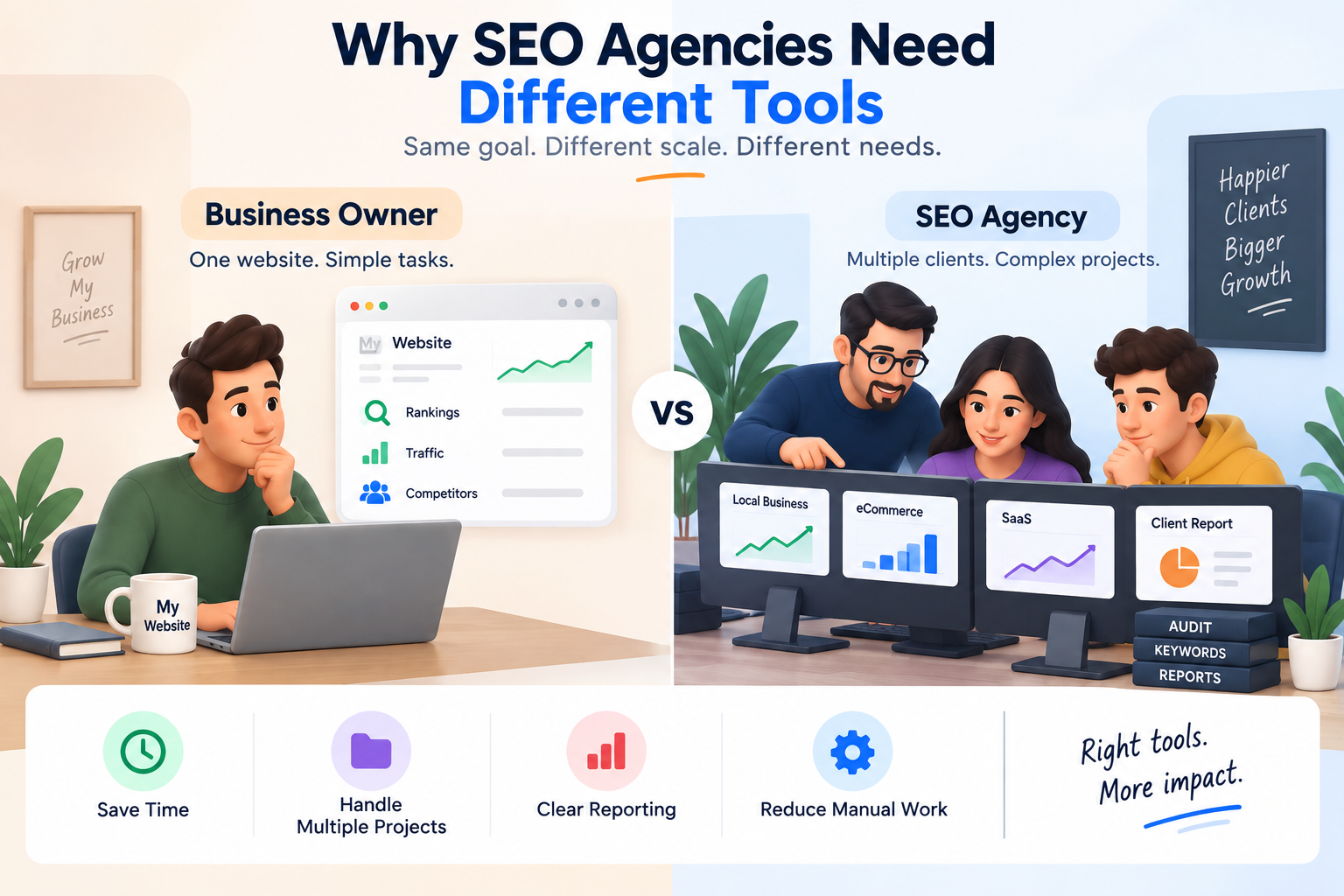
Imagine a business owner checking the rankings of one website every Monday morning. They may need keyword positions, traffic data, a few competitor insights, and an occasional site audit.
An agency has a different problem. On the same Monday morning, the team might be checking rankings for a local service company, investigating lost traffic for an eCommerce store, preparing a technical audit for a SaaS website, and building a report for another client.
That changes what makes an SEO platform valuable.
An agency SEO tool needs to help with more than keyword research. It should save time, handle multiple projects, make data easier to explain, and ideally reduce the amount of manual work required for recurring SEO tasks.
This is why the best SEO software for agencies is not always the tool with the longest feature list. A platform becomes valuable when it fits naturally into your workflow.
What we look for before adding an SEO tool to our stack
We usually care about five things: data quality, usability, scalability, reporting, and whether the tool helps us make an actual SEO decision.
That final point deserves attention. A dashboard showing 67 charts may look impressive, but if nobody knows what to do after reading those charts, it is not doing much for the client.
Good SEO software should move you from data to diagnosis to action.
With that in mind, let’s look at the tools we would actually consider for an agency in 2026.
1. Semrush: Best All-in-One SEO Tool for Agencies
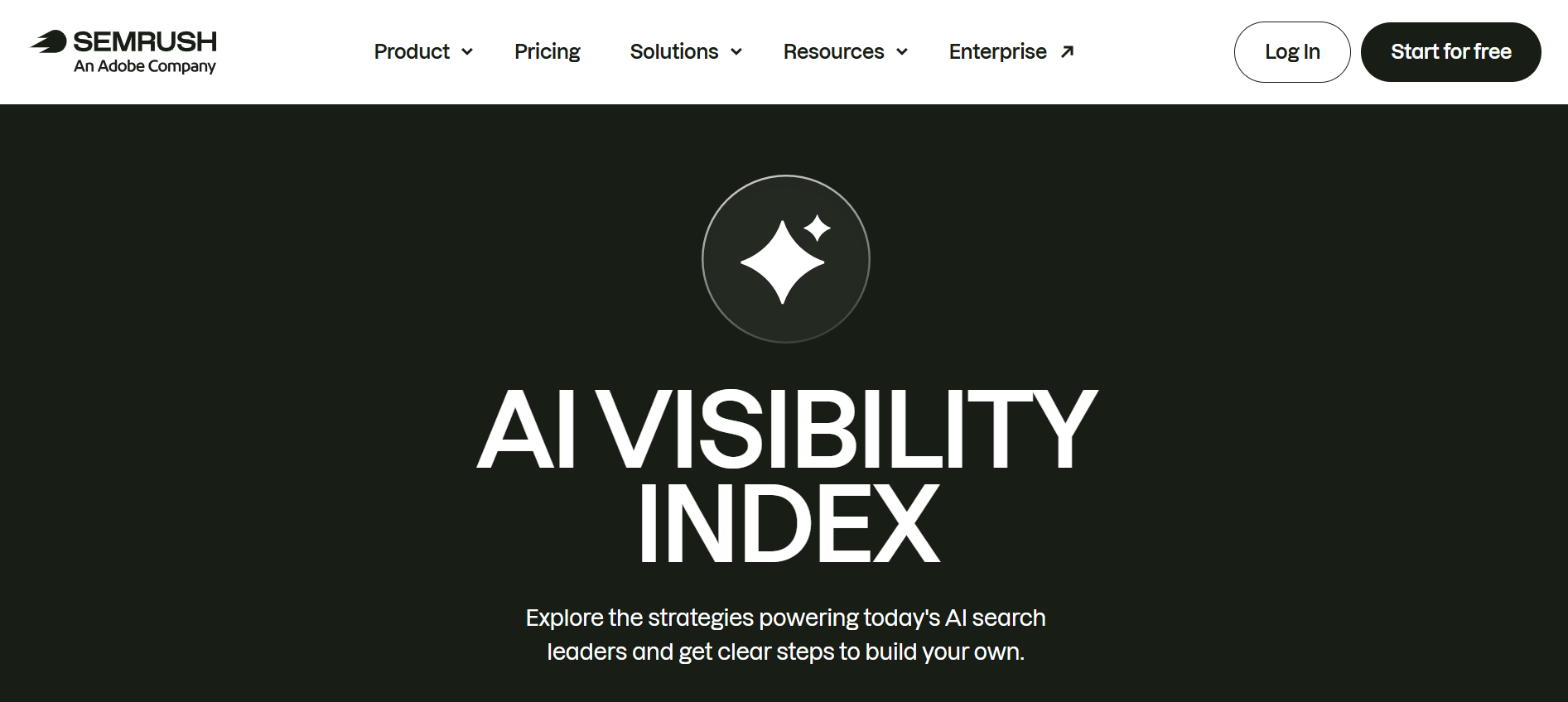
Semrush is one of the first platforms we reach for when an SEO project needs several types of research in one place. It covers keyword research, competitor analysis, rank tracking, backlink research, site auditing, content research, and several other areas of digital marketing.
For an agency, that range matters because switching between five different platforms for a basic competitor analysis can become surprisingly expensive in terms of time.
Where Semrush is especially useful
One of our common starting points is competitor research. Before changing a client's SEO strategy, we want to understand who already owns visibility in that search market and why.
Semrush helps us investigate competing domains, organic keywords, ranking pages, keyword gaps, backlink profiles, and paid search activity. Instead of beginning with a blank spreadsheet, we can build an initial picture of the market relatively quickly.
Its keyword tools are useful for the same reason. You can take a broad topic, explore related search terms, compare difficulty and intent, and start separating informational opportunities from commercial ones.
That makes it particularly useful for agencies handling both SEO strategy and content planning.
Why agencies may prefer Semrush
The strongest reason is consolidation. A team can perform a large part of its everyday SEO research without constantly moving between unrelated tools.
It also works well when an agency manages several websites. Projects, position tracking, site audits, competitor monitoring, and reporting can become part of a repeatable process rather than a collection of one-off searches.
Semrush is not automatically the right choice for every agency, though. Smaller teams that only need basic keyword research may find that they are paying for far more functionality than they regularly use.
Our take: Semrush makes the most sense when SEO is an ongoing agency service rather than an occasional website add-on.
2. Ahrefs: Excellent for Competitor and Backlink Research
There is a particular moment during competitor research when Ahrefs becomes difficult to ignore.
You find a competitor ranking above your client for several important searches. Their content does not appear dramatically better, their website is not obviously faster, and their brand is not necessarily stronger.
Then you look at links.
Suddenly, the situation starts making more sense.
Ahrefs has built a strong reputation around backlink analysis, but treating it only as a backlink checker undersells what agencies can do with it. It is also useful for keyword research, competitor analysis, content discovery, rank tracking, and website auditing.
How we use Ahrefs in agency SEO work
A common use case is reverse engineering successful pages.
Suppose a competitor has a service page attracting substantial organic visibility. We can investigate the keywords associated with that page, examine referring domains, look at related competing pages, and study the wider topic before deciding what our client needs.
That is much more useful than simply copying the competitor's heading structure.
Ahrefs is also valuable when reviewing an existing backlink profile. An agency can explore where links are coming from, which pages attract links naturally, and where competitors may have earned authority that the client has not.
Ahrefs vs Semrush for agencies
People often want a simple winner between Ahrefs and Semrush. In practice, the answer depends on what your team does most often.
If we need a broad digital marketing and SEO platform, Semrush can be very convenient. When deeper backlink exploration and organic competitor research are central to the task, Ahrefs is often one of the tools we want available.
Some established agencies use both.
A smaller agency probably does not need to do that immediately. Pick the platform that covers the majority of your workflow, then add the second when the extra data starts creating enough value to justify another subscription.
Best fit: SEO agencies doing serious competitor research, content analysis, backlink audits, and link building.
3. Screaming Frog SEO Spider: The Tool That Finds What Dashboards Miss
A website can look perfectly healthy in a browser and still be a technical mess underneath.
A page loads. The menu works. The images appear. Nothing looks obviously broken.
Then Screaming Frog crawls it.
You discover redirect chains, duplicate title tags, missing descriptions, inconsistent canonicals, broken internal links, oversized pages, indexability problems, or URLs that should never have existed in the first place.
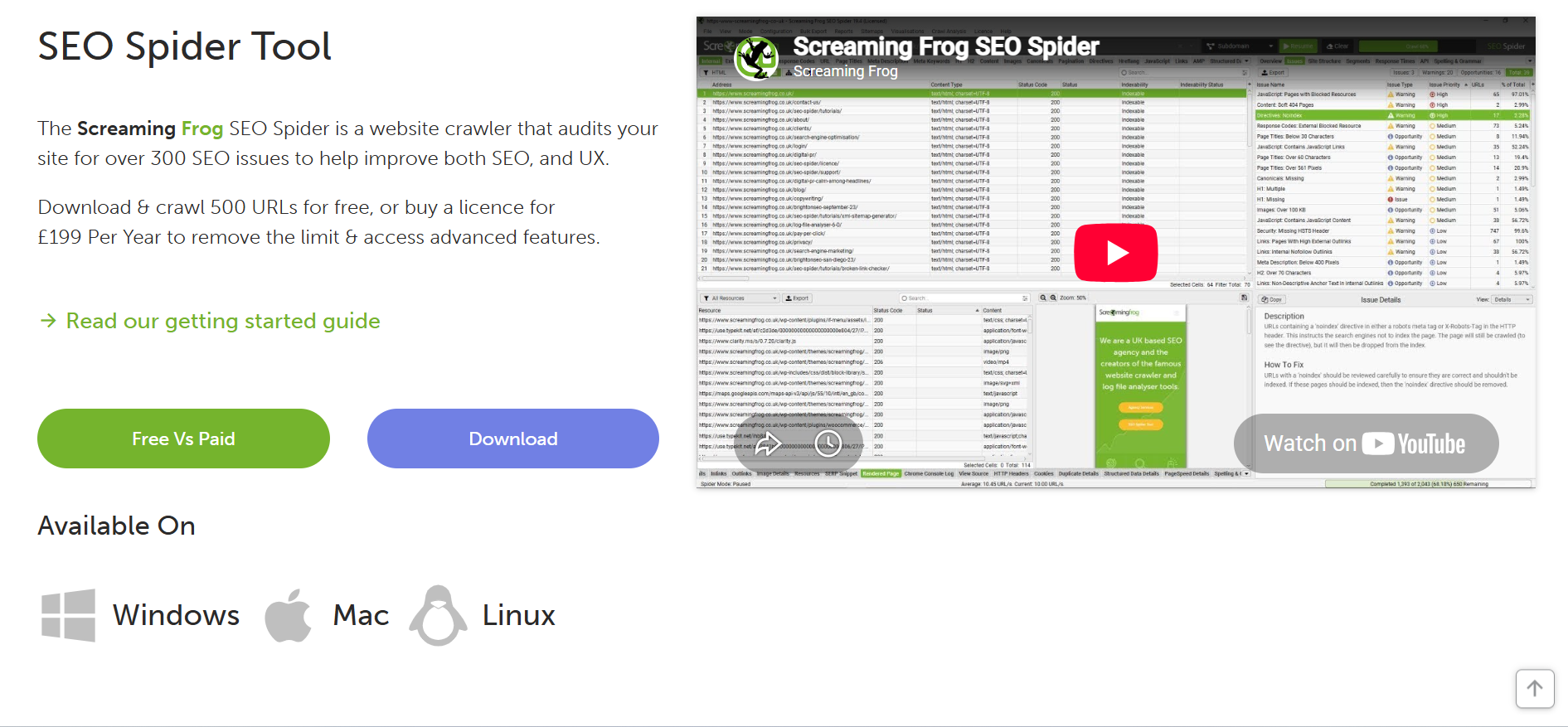
This is why Screaming Frog SEO Spider remains an important part of our SEO toolkit.
What does Screaming Frog actually do?
Think of it as a search engine crawler you can control.
You give it a website and it moves through URLs and links while collecting technical information about the pages it discovers. That information allows an SEO specialist to inspect the structure of a site rather than reviewing pages individually.
For a 12-page brochure website, manual checks might still be manageable. For a store with thousands of products, categories, filters, and parameter URLs, manual auditing quickly becomes unrealistic.
Screaming Frog helps make that investigation practical.
Technical SEO tasks we use it for
It can assist with identifying broken links, redirects, missing metadata, duplicate elements, canonical configurations, heading issues, crawl depth, response codes, and many other technical SEO signals.
The important part is interpretation.
A tool can tell you that 800 pages have missing meta descriptions. It cannot automatically tell you whether writing 800 descriptions is the highest-value task for that particular business.
That judgment still belongs to the SEO team.
Best fit: Agencies offering technical SEO audits, website migrations, large-site optimization, and ongoing technical monitoring.
4. Mangools: A Friendly SEO Toolkit Without the Enterprise Feeling
Not every SEO task needs a giant platform.
Sometimes you want to research a keyword, inspect the search results, check a domain, or monitor a group of rankings without opening an interface that feels like the control room of an airport.
This is where Mangools can be refreshing.
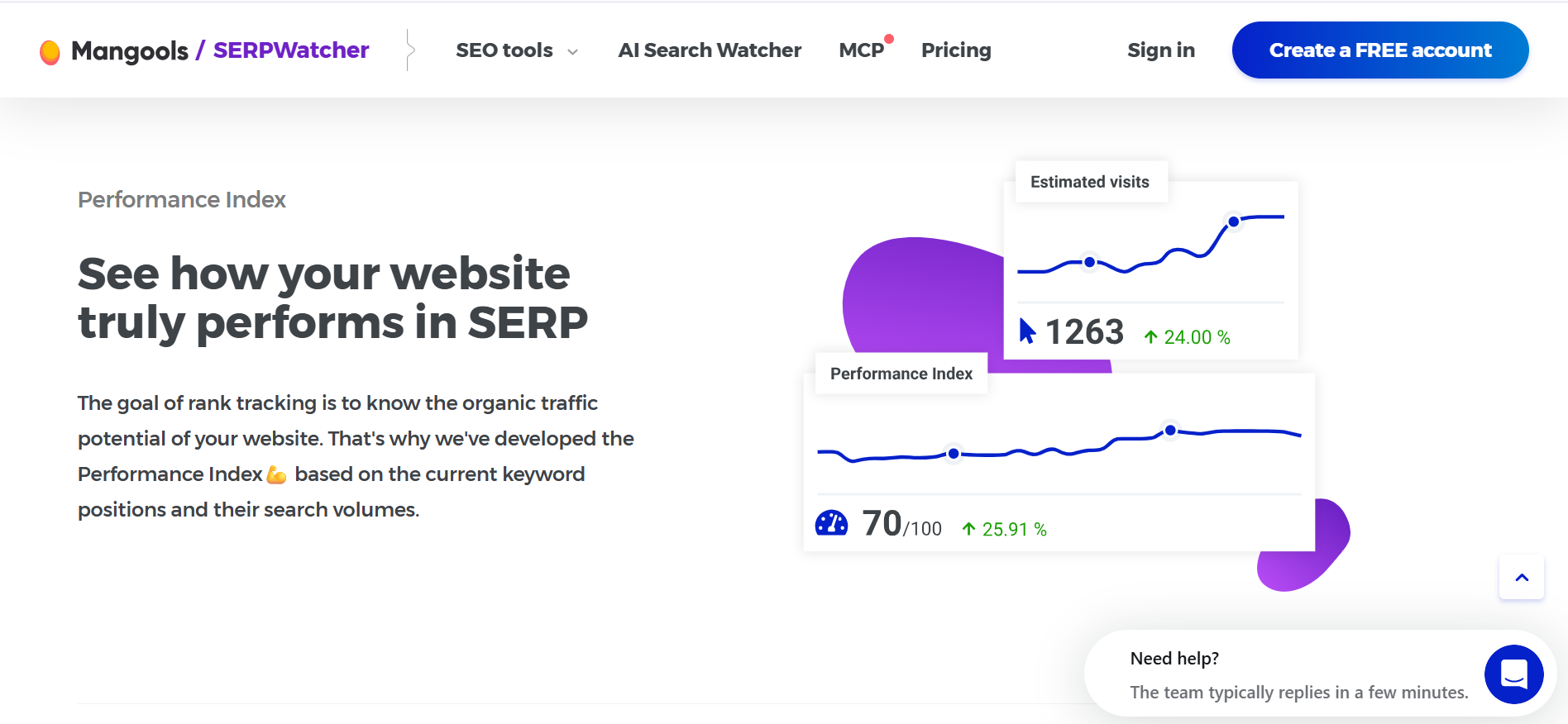
Its suite includes tools for keyword research, SERP analysis, rank tracking, backlink analysis, and website metrics. The interface is approachable enough that a beginner can start using it without spending the afternoon watching tutorials.
Why we keep Mangools in our wider toolkit
We primarily use larger SEO platforms for complex projects, but simpler tools still have a place.
Mangools can be useful for quick keyword exploration and SERP research. It is also easier to introduce to someone who does not work in SEO every day.
That matters more than people think.
Agency owners sometimes buy the most sophisticated platform available and then discover that only one person on the team is comfortable using it. Software does not create leverage when everyone avoids opening it.
For smaller agencies, freelancers, and teams building their SEO process, Mangools offers a much gentler entry point.
Best fit: Beginners, boutique agencies, freelancers, and teams that value simplicity over having every SEO feature imaginable.
5. Google Search Console: The Free Tool Every Agency Should Use
If I could see data from only one source about how Google Search is interacting with a client's website, I would want Google Search Console available.
It is free, but do not confuse free with basic.
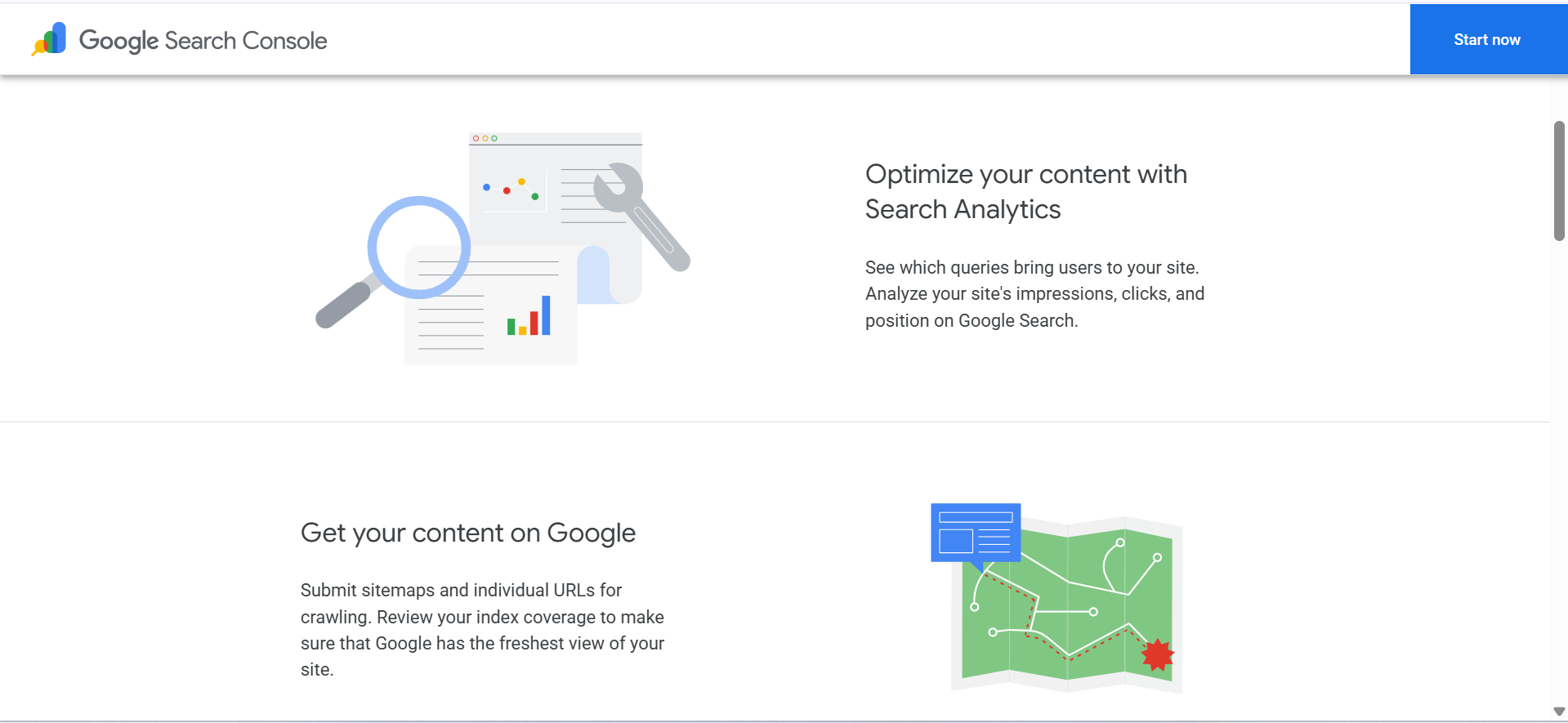
Search Console provides information about search queries, impressions, clicks, average positions, pages appearing in search, indexing, sitemaps, and other search-related signals.
More importantly, the information comes from Google.
Search Console tells a different story
Third-party SEO tools estimate a great deal of useful information. Google Search Console shows data connected to the website's actual presence in Google Search.
That distinction matters.
For example, a page may be receiving impressions for a keyword nobody originally targeted. That can reveal a content opportunity that a traditional keyword plan missed.
Another page may receive thousands of impressions but very few clicks. That can lead us to investigate the search intent, title, snippet, position, SERP features, and whether the page actually deserves the click.
This is the type of information that makes Search Console useful beyond monthly reporting.
Don't use GSC as a ranking trophy cabinet
Opening Search Console just to celebrate that impressions increased is a missed opportunity.
We prefer asking questions.
Which pages are gaining visibility? Which queries are slipping? Are important pages indexed? Did clicks fall while impressions remained stable? Is one section of the site growing while another is declining?
Those questions turn Search Console into a decision-making tool.
Best fit: Everyone. If your agency manages organic search and does not have appropriate Search Console access, fix that before purchasing another SEO subscription.
6. Google Analytics 4: Connect SEO Traffic to Business Results
Rankings are useful. Revenue, qualified leads, bookings, sign-ups, and enquiries are usually more interesting to the person paying your invoice.
That is why SEO agencies need analytics alongside traditional SEO software.
Google Analytics 4, commonly called GA4, helps agencies understand what visitors do after reaching a website. You can analyze traffic acquisition, landing pages, user behavior, events, conversions, and other performance data depending on how tracking has been configured.
The configuration part is important.
Bad tracking produces confident-looking reports based on questionable data. Before drawing conclusions, an agency should understand what is being measured and whether the setup matches the client's real business goals.
A simple example
Imagine organic traffic grows by 35 percent.
That sounds excellent.
Now imagine most of that growth comes from informational visitors who never become leads, while organic visits to high-value service pages are declining.
The second part changes the conversation completely.
This is why our SEO reporting philosophy is not simply “more traffic equals success.” Traffic should eventually connect with the outcomes the business actually cares about.
Best fit: Every SEO agency that needs to connect search performance with user behavior and conversions.
7. Looker Studio: Turn SEO Data Into Client-Friendly Reports
SEO professionals can happily spend an hour discussing impressions, referring domains, indexability, non-brand clicks, and keyword movement.
Most business owners do not want that meeting.
They want to know what changed, why it matters, what you did, and what happens next.
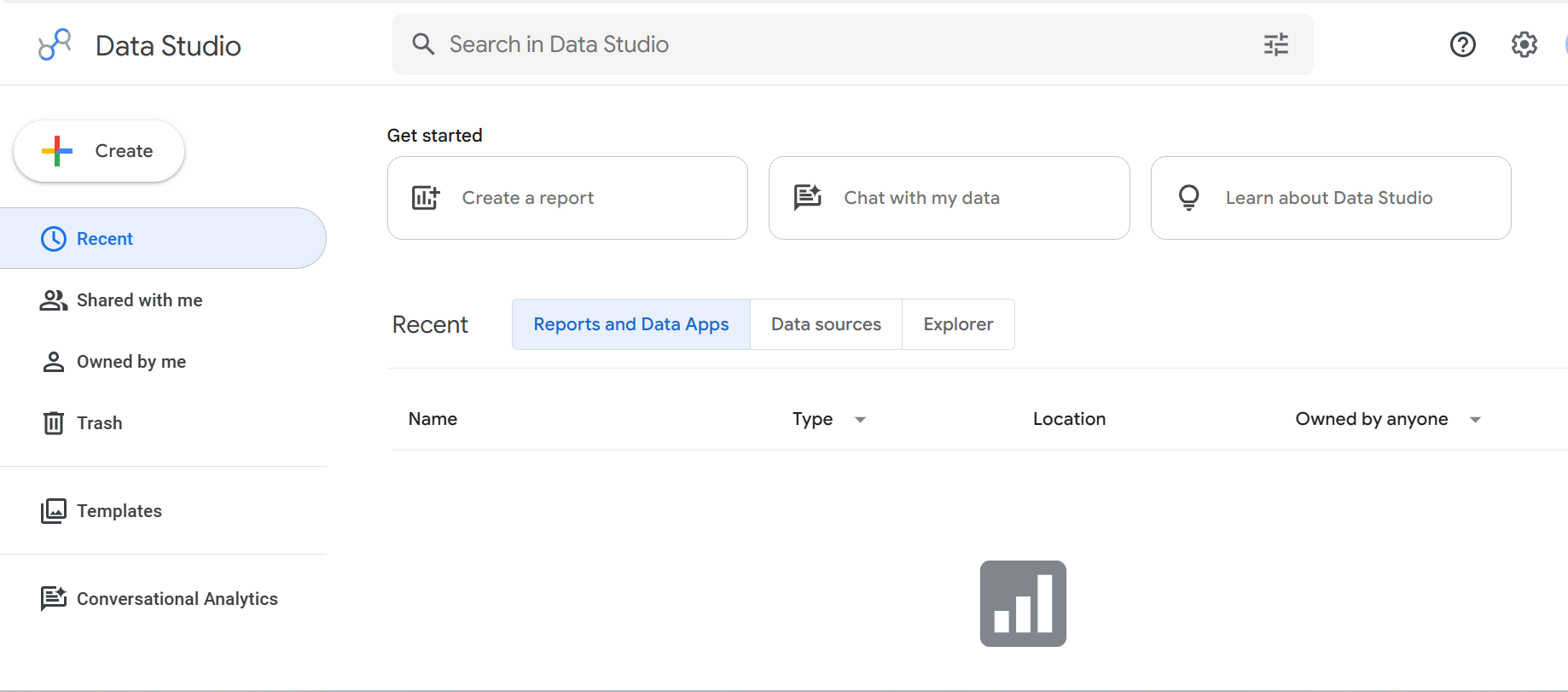
Looker Studio helps agencies turn data into dashboards that clients can understand. It can be particularly useful when combining information from multiple sources into a recurring SEO reporting system.
The best SEO report is not the biggest report
A 42-page monthly report is not automatically more professional than a five-page report.
In fact, the longer report can sometimes hide the important information.
A useful agency dashboard should make key performance trends visible without requiring the client to become an SEO analyst. Traffic, conversions, important landing pages, search visibility, and meaningful progress should be easy to locate.
Then add human context.
A chart can show that clicks dropped. Your agency needs to explain whether the cause appears to be seasonality, ranking loss, changing search demand, technical issues, SERP changes, or something else.
Best fit: Agencies managing recurring SEO clients and monthly performance reporting.
8. PageSpeed Insights: Useful for Performance and Core Web Vitals
A slow website is not just an SEO discussion. It is a user experience discussion.
Someone clicks a result, waits, tries to interact, and gets frustrated. Even before you discuss rankings, that experience deserves attention.
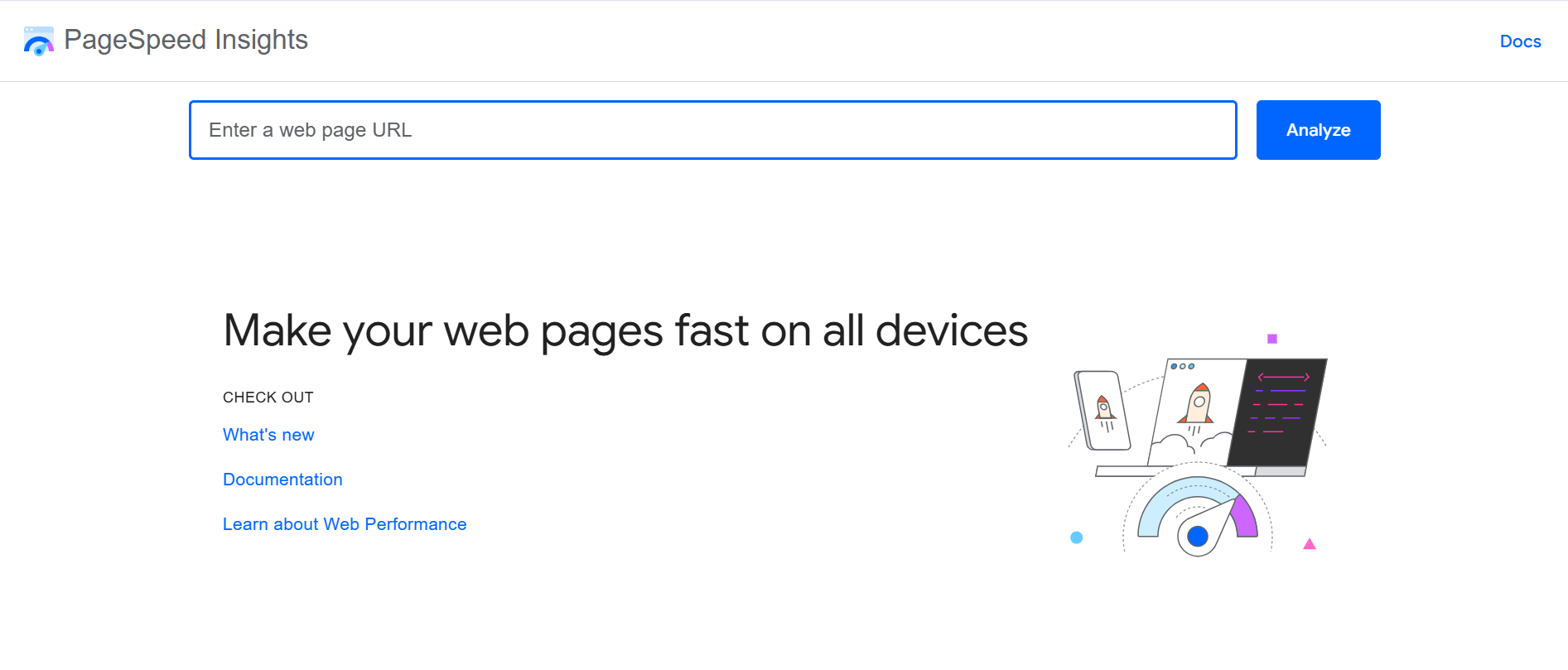
Google PageSpeed Insights gives teams a convenient way to investigate page performance and Core Web Vitals-related information.
Don't chase a score just because it is red
This is where non-technical teams sometimes get trapped.
They see a performance score and immediately decide the project is to make the number 100.
That is not the goal.
Use performance tools to understand real problems affecting users and the website. A slightly imperfect score on a fast, usable, revenue-producing site can be less urgent than a serious loading or interaction problem on a key landing page.
We treat performance data as part of a wider technical and UX investigation rather than a video game score.
Best fit: Technical SEO, CRO, web development, and agencies responsible for website performance.
9. Google Keyword Planner: Still Useful When You Know Its Role
Google Keyword Planner is usually associated with Google Ads, but SEO teams can still get useful information from it.
It can help with keyword discovery, related terms, commercial language, and understanding how advertisers think about a search market.
That last part can be surprisingly useful.
If advertisers consistently bid on a group of searches, there is often a business reason behind that interest. It does not prove SEO value, but it gives you another piece of context.
We would not use Keyword Planner as our only SEO keyword research tool. Combined with Search Console, Semrush, Ahrefs, or Mangools, however, it can contribute another perspective.
Best fit: Agencies combining SEO and PPC or researching commercially valuable search topics.
What About AI SEO Tools in 2026?
You cannot discuss SEO tools in 2026 without discussing AI.
AI can now help teams classify keywords, organize large datasets, summarize SERPs, generate content briefs, analyze patterns, brainstorm content angles, assist with schema, and speed up repetitive SEO work.
That is useful.
The mistake is assuming faster output automatically means better SEO.
A tool can generate 200 article ideas before lunch. It cannot guarantee that those 200 articles deserve to exist.
Where AI actually helps our workflow
We see the most value when AI removes repetitive work or helps an experienced person process information faster.
For example, clustering a large keyword list manually can take hours. AI-assisted workflows can speed up the first pass, after which an SEO specialist reviews the groups based on intent and business relevance.
The same applies to content.
AI can help organize research, explore questions, or structure a brief. Publishing generic generated articles at scale without expert review is a completely different strategy, and not one we recommend treating as a shortcut to sustainable organic growth.
In 2026, SEO automation tools are becoming more capable. Human judgment is becoming more important at the same time because producing content has become easier for everyone.
Semrush vs Ahrefs vs Mangools: Which One Should Your Agency Choose?
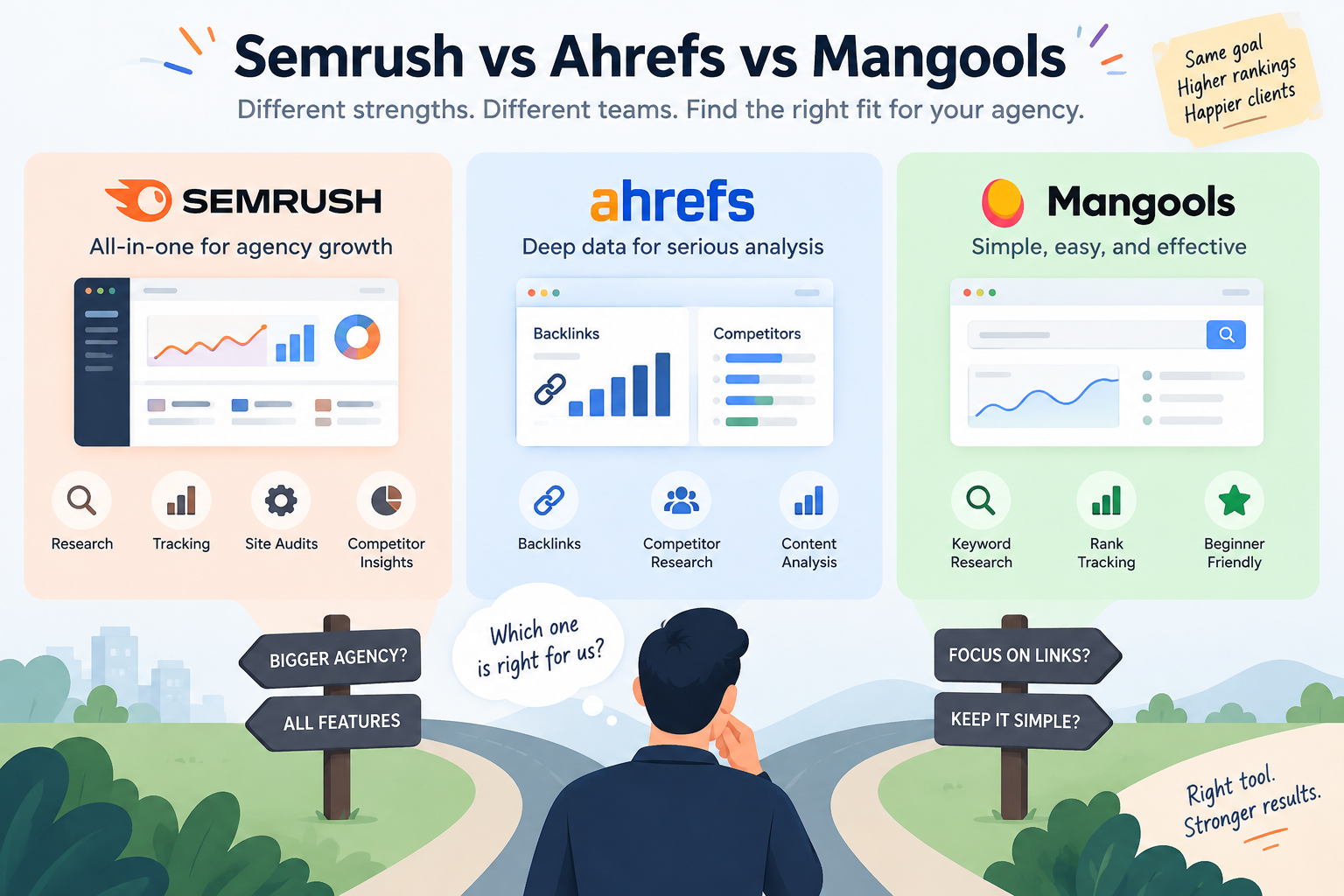
This is probably the comparison most new agencies care about.
There is no universal winner, so choose based on the type of SEO work you expect to perform regularly.
Choose Semrush if you want a broad all-in-one platform covering several areas of SEO and digital marketing. It makes sense for agencies that want research, tracking, auditing, competitive intelligence, and multiple workflows under one roof.
Choose Ahrefs if competitor research, backlinks, organic content analysis, and link research are especially important to your services. It is particularly useful when your team spends significant time investigating why competing pages and domains perform well.
Choose Mangools if simplicity matters more than having the deepest possible toolkit. Smaller teams and people learning SEO may find it much easier to adopt.
There is also nothing wrong with starting small.
The best platform is the one your team can use consistently to make better decisions. Buying an expensive subscription that sits untouched for three weeks every month is not an SEO strategy.
How We Build an SEO Tool Stack for Agency Work
Our approach is to give tools jobs rather than collecting features.
One platform might be responsible for competitive SEO research. Another handles crawling, while Google provides first-party search and analytics data.
That creates a workflow that looks something like this:
Market and competitor research: Semrush and Ahrefs help us understand the competitive landscape, ranking opportunities, backlinks, keywords, and existing organic visibility.
Keyword and SERP research: Semrush, Ahrefs, and Mangools can each contribute depending on the size and complexity of the project.
Technical crawling: Screaming Frog lets us inspect what is happening across the site's URLs and technical structure.
Real search performance: Google Search Console helps us understand actual Google Search visibility, clicks, queries, pages, and indexing information.
Website behavior and conversions: GA4 helps connect organic acquisition with what users do after arriving.
Performance checks: PageSpeed Insights contributes performance and Core Web Vitals information.
Reporting: Looker Studio can bring important metrics into a format that clients can follow more easily.
Notice what is missing from that workflow.
There is no step called “open every SEO tool and export everything.”
More data is not always more insight.
How to Choose the Best SEO Tools for Your Agency
Before entering a credit card number, write down the SEO services your agency actually sells.
If your core offer is local SEO for small businesses, your needs will differ from an agency managing international eCommerce stores with hundreds of thousands of URLs.
Start with the work.
1. Identify your recurring SEO tasks
Write down what your team does every week and every month.
Keyword research, technical audits, rank tracking, content planning, backlink analysis, competitor research, local SEO, reporting, and conversion analysis are common examples.
Then identify which activities consume the most time.
Those are often the best places for software to create leverage.
2. Separate essential features from impressive features
Software demos are designed to make every feature feel necessary.
It rarely is.
If your team never performs PPC research, a sophisticated PPC toolkit adds little value to your SEO workflow. If you manage enterprise websites, however, stronger crawling and technical analysis capabilities may be essential.
Buy around your real process.
3. Consider the number of client projects
A freelancer managing three websites and an agency managing 70 websites should not build the same technology stack.
As client volume increases, project limits, tracked keywords, crawl allowances, users, exports, reporting, and collaboration features become increasingly important.
This is also where pricing can become deceptive.
A tool that looks cheaper at the entry level may become expensive after adding the capacity your agency actually needs.
4. Check whether your team will use it
The best SEO tools for agencies should make work easier, not create another internal training project nobody finishes.
Run trials where available. Give the platform to the person who will actually use it and ask them to complete a real task.
Can they find the information quickly?
Can another team member understand the output?
Can you turn the findings into something useful for a client?
Those answers matter more than a feature comparison page.
Free vs Paid SEO Tools: What Does an Agency Really Need?
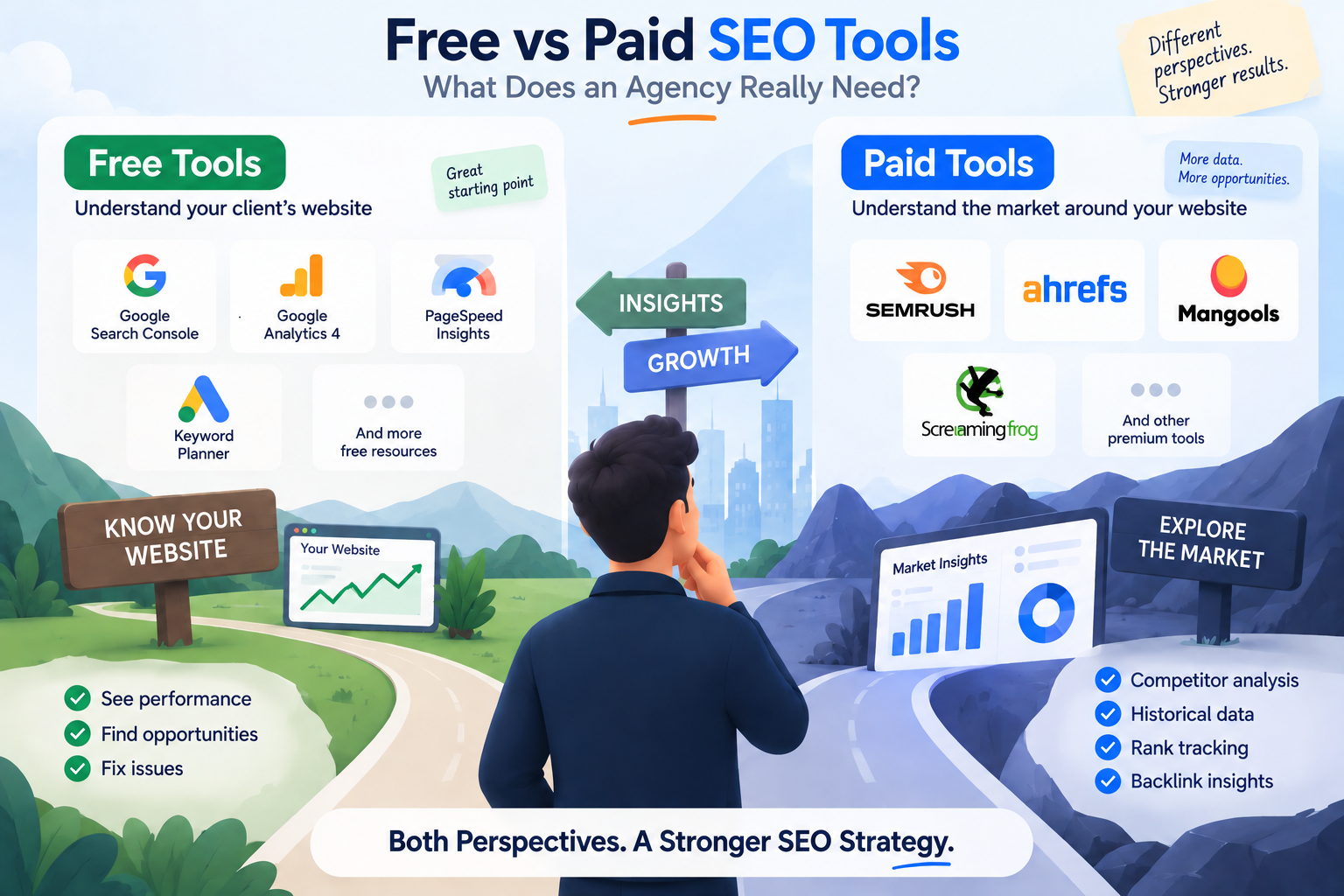
A new agency can accomplish more with free SEO tools than many beginners realize.
Google Search Console, GA4, PageSpeed Insights, Keyword Planner, and other free resources can provide a strong foundation.
Paid platforms become valuable when you need greater efficiency, competitive intelligence, historical datasets, larger-scale research, rank tracking, backlink analysis, or advanced auditing.
Think of the difference this way.
Free tools can tell you a lot about your client's website. Paid SEO platforms are often especially valuable when you need to understand the market around that website.
For an agency, you eventually need both perspectives.
The SEO Tool Mistake That Costs Agencies More Than Subscription Fees
The expensive mistake is not choosing Ahrefs when you should have chosen Semrush.
It is building reports without making decisions.
An agency can spend hundreds or thousands of dollars on SEO software, collect beautiful charts, send them to clients, and still struggle to explain what should happen next.
Consider a keyword sitting in position 11.
The tool reports the position accurately. Great.
The actual SEO work begins after that.
Is the page aligned with search intent? Is the content weaker than competing results? Does it lack internal links? Are stronger pages competing with it? Does it need better authority? Has the SERP changed? Is the keyword commercially important enough to prioritize?
No subscription answers all of those questions for you.
SEO tools provide evidence. SEO professionals turn that evidence into decisions.
That distinction matters even more in 2026.
A Practical SEO Tool Stack for Different Agency Sizes
You do not need to build the final version of your agency technology stack on your first day.
Start with the smallest setup capable of doing excellent work.
For a new or small SEO agency
Use Google Search Console, GA4, PageSpeed Insights, and Looker Studio as your foundation. Add Mangools if you want accessible keyword and SERP research, or invest in Semrush or Ahrefs if competitor research is already central to your service.
Screaming Frog is worth learning early if you perform website audits.
This stack gives you enough capability to do meaningful work without creating a large monthly software bill before recurring SEO revenue exists.
For a growing agency
At this stage, Semrush or Ahrefs will usually become much easier to justify.
You may also need stronger reporting processes, crawling, rank tracking, project management, and specialized local or content tools depending on your clients.
The priority now shifts from simply having data to creating repeatable workflows.
If an audit that once required eight hours can be performed thoroughly in four, the software is creating operational value beyond its feature list.
For an established SEO agency
Larger agencies often combine platforms.
Semrush and Ahrefs may coexist because teams use their datasets differently. Screaming Frog can handle technical investigations while additional enterprise crawlers, content platforms, local SEO software, reporting systems, APIs, and automation tools support specialized workflows.
At this level, integration becomes important.
The question changes from “Which SEO tool is cheapest?” to “Which combination helps our team deliver reliable work efficiently across many accounts?”
Do You Really Need Both Semrush and Ahrefs?
Not necessarily.
For a small agency, paying for both before you have a clear use case can be unnecessary. Either platform can cover a significant portion of everyday SEO research.
As the agency grows, using both can make more sense.
Different SEO databases can show different estimates, links, keywords, and competitive insights. Having another source can be useful when investigating important opportunities rather than treating one third-party metric as absolute truth.
We use SEO tools as sources of evidence, not as unquestionable authorities.
That is a healthy habit regardless of which platform you choose.
Can SEO Tools Replace an SEO Expert?
No, and this is one of the most important things for business owners to understand.
Modern SEO software can crawl thousands of pages, identify patterns, track rankings, discover keywords, compare competitors, analyze links, and produce impressive reports.
It still needs context.
Imagine a site audit identifies 1,400 warnings.
A beginner may assume the goal is to make the warning count zero. An experienced SEO professional asks which issues can actually affect crawling, indexing, user experience, relevance, authority, or business performance.
Those are very different approaches.
The value of an experienced SEO team is not that they own expensive software. It is knowing which information matters and what to do with it.
Frequently Asked Questions About SEO Tools for Agencies
What is the best SEO tool for agencies in 2026?
Semrush is one of the strongest all-in-one options for agencies because it combines keyword research, competitor analysis, rank tracking, auditing, backlink research, and other marketing capabilities.
Ahrefs is another excellent choice, particularly for backlink and competitor research. The better option depends on your services, team workflow, number of clients, and budget.
What SEO tools should a new agency start with?
Start with Google Search Console, Google Analytics 4, PageSpeed Insights, and one primary keyword or competitor research platform.
Screaming Frog is also highly valuable if technical SEO audits are part of your service. You can add specialized tools later as client requirements become more complex.
Is Semrush good for SEO agencies?
Yes. Semrush is particularly useful for agencies that want multiple SEO workflows inside one platform.
It can support keyword research, competitor research, position tracking, technical auditing, backlink analysis, and content planning. Agencies should still evaluate plan limits and features against their number of projects and users.
Is Ahrefs better than Semrush?
Neither is better for every agency.
Ahrefs is particularly strong for backlink and competitor research, while Semrush offers a broad collection of SEO and digital marketing features. Many larger SEO teams use both, while smaller agencies can usually begin with one.
Is Screaming Frog necessary for SEO?
It is not mandatory for every SEO campaign, but it is extremely useful for technical SEO.
For agencies auditing medium and large websites, a crawler such as Screaming Frog can uncover issues that would be tedious or unrealistic to find manually.
Are free SEO tools enough for an agency?
They can be enough to start learning and to handle certain tasks, but an agency will usually benefit from paid software as its client base and research requirements grow.
Google's free tools provide valuable first-party information. Paid platforms add competitive research, backlink databases, rank tracking, larger-scale keyword analysis, and workflow efficiencies.
How many SEO tools does an agency need?
There is no ideal number.
A small agency may operate effectively with four or five carefully selected tools, while a larger specialist agency may use many more. The objective should be coverage of necessary workflows rather than collecting subscriptions.
Which SEO tool is easiest for beginners?
Mangools is one of the more approachable options for beginners because its tools and interface are relatively easy to understand.
Google Search Console is also essential to learn, although interpreting its data properly takes practice.
Can AI tools do SEO automatically?
AI can automate or accelerate parts of SEO, including data organization, keyword classification, research assistance, content briefs, and repetitive analysis.
It should not be treated as a replacement for strategy, expert review, original experience, quality control, or business judgment.
Final Verdict
The best SEO tools for agencies are not necessarily the platforms with the most buttons.
They are the tools that help your team understand a problem faster, make a better decision, execute the solution, and demonstrate the result to the client.
For our own agency workflow, Semrush, Ahrefs, Mangools, Screaming Frog, Google Search Console, GA4, and other specialized tools give us different views of the same SEO landscape. We do not expect one platform to tell us everything.
If you want one broad paid SEO platform, Semrush is a strong place to start. If competitor and backlink research are major priorities, Ahrefs deserves serious consideration.
For technical SEO, Screaming Frog is difficult to replace with a traditional keyword research platform. For beginners and smaller teams wanting something approachable, Mangools can make the learning curve less intimidating.
And regardless of your budget, do not ignore Google Search Console and Google Analytics.
The bigger lesson is simple.
Do not build your SEO strategy around your tools. Build your tool stack around your SEO strategy.
A $500 monthly software stack in inexperienced hands can produce a beautiful collection of meaningless reports. A smaller toolkit used by people who understand search intent, technical SEO, content quality, links, user experience, and business goals can produce far more valuable work.
In 2026, SEO agencies have access to more data and automation than ever before.
Knowing what deserves your attention is the real tool.

SEO & Content strategist focused on building search-driven content strategies that increase organic traffic, visibility, and business growth.
Get started with ...